
How fascia science is changing the way we understand inch loss, fluid retention, and body contouring
In recent years, new scientific attention has turned to a long-overlooked tissue in the body: fascia.
Once dismissed as simple “packing material” around muscles and organs, fascia is now recognised as a continuous, living connective tissue network that influences how the body holds shape, moves fluid, and responds to tension.
For us in advanced body therapies, this shift is quietly important.
Because it reframes what many clients experience not simply as “fat” or “weight,” but as something far more dynamic: fascial congestion and fluid retention within the tissue matrix.
At Shrinking Violet, this is where the philosophy of treatment becomes very clear:
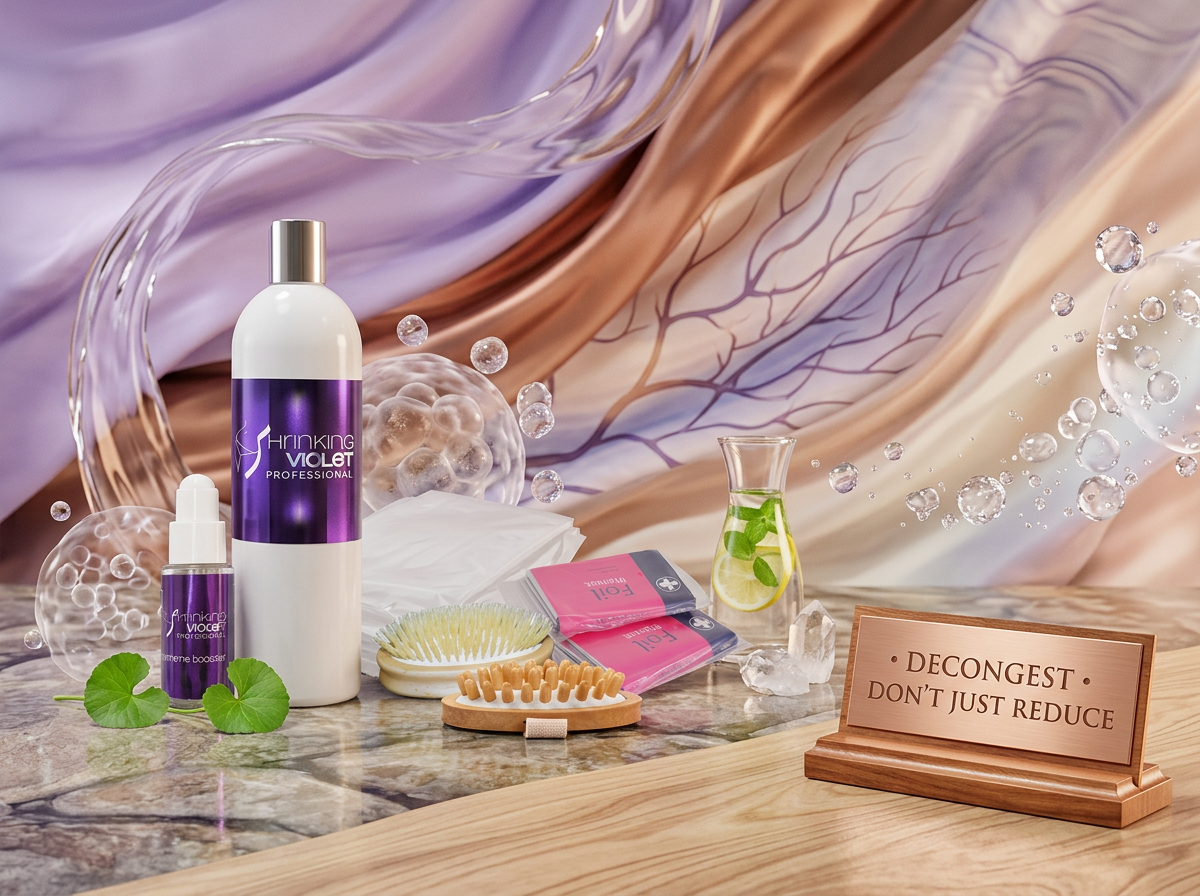
Decongest, don’t just reduce.
What fascia has to do with body shape
Fascia surrounds and interweaves through everything in the body — muscles, fat, blood vessels, and lymphatic channels. It is richly hydrated, highly responsive, and constantly adapting to:
- Movement patterns
- Hydration levels
- Stress and tension
- Circulatory and lymphatic flow
When fascia is healthy, it is supple and well-lubricated, allowing tissues to glide and fluids to circulate freely.
But when it becomes dehydrated, over-stressed, or restricted, it can behave differently:
- Fluid becomes trapped in the tissue spaces
- Areas feel swollen, dense, or “puffy”
- Skin texture appears less smooth
- The body feels heavier or tighter, even without weight change
This is not simply cosmetic — it is a change in the internal environment of the tissue itself.
Why “inch loss” is often fluid and fascial, not just fat
Traditional body treatments have often focused on reduction: fat, centimetres, weight.
But fascia research suggests a more nuanced reality.
A significant proportion of visible body change in non-invasive treatments is influenced by:
- Interstitial fluid movement
- Lymphatic drainage efficiency
- Fascial hydration and release patterns
When these systems shift, the body can appear:
- Less bloated
- More contoured
- Smoother in surface texture
- Lighter in overall tissue density
This is why results can be immediate, even before any longer-term metabolic changes are considered.
How Shrinking Violet works with the body’s connective system
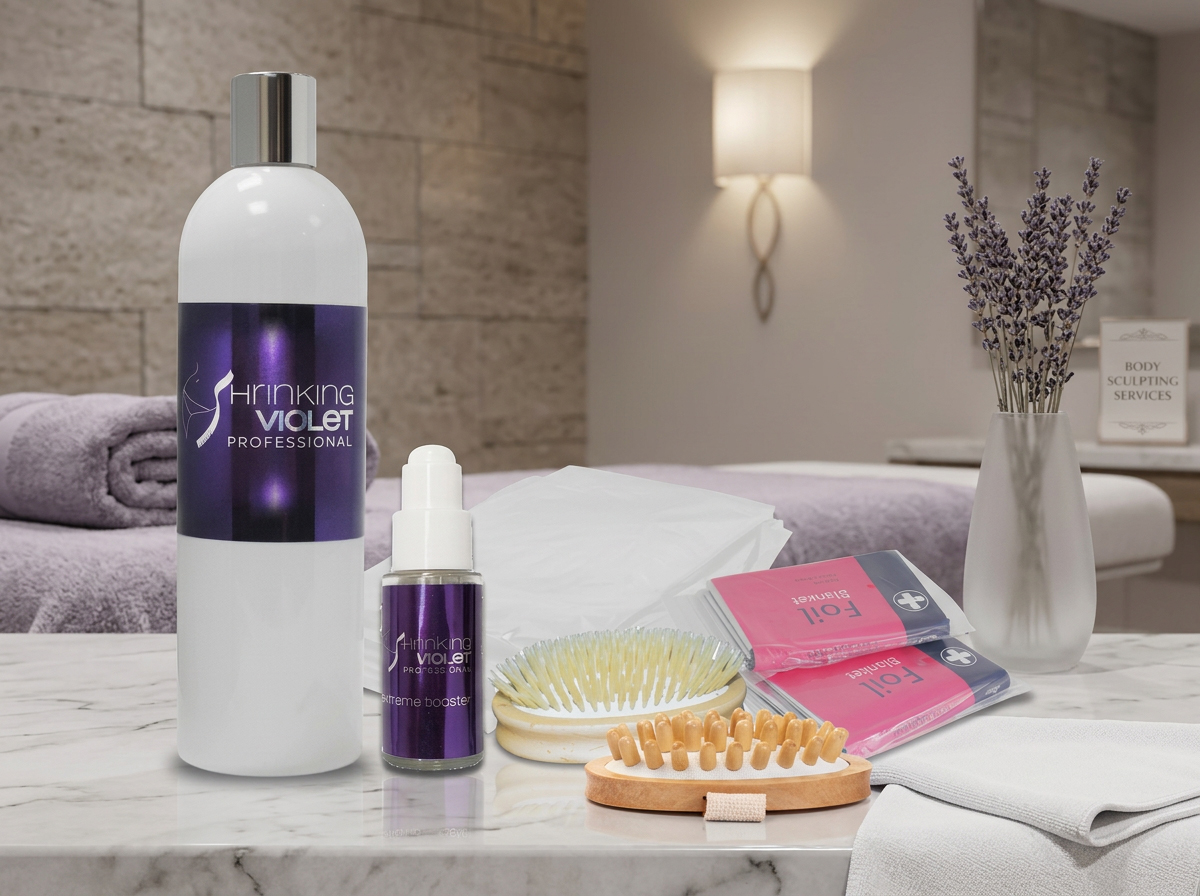
Shrinking Violet Body Wrap treatments are designed to work with these physiological systems, not against them.
Through a carefully structured protocol combining active botanical ingredients, occlusion, and controlled thermal conditions, the treatment supports:
- Fluid mobilisation
Encouraging the movement of excess interstitial fluid away from congested areas. - Tissue decongestion
Helping reduce the “water-loaded” feel that often sits within superficial fascial layers. - Improved tissue glide
Supporting a softer, more pliable state within the connective tissue matrix. - Visible contour refinement
As fluid balance normalises, the body often appears more defined and sculpted.
Why this matters for modern body concerns
Many of the concerns clients present with today are not purely structural fat-related changes. They are often influenced by:
- Hormonal shifts (including perimenopause and menopause)
- Reduced lymphatic efficiency from sedentary lifestyles
- Chronic stress and elevated tissue tension
- Post-inflammatory fluid retention
These factors all interact through the fascial system.
Which is why approaches focused purely on “reduction” can feel incomplete.
The body does not only need to be reduced.
It often needs to be unloaded, softened, and rebalanced.
Decongest, don’t just reduce
This principle is increasingly relevant in advanced aesthetic and wellness treatments.
Because when congestion is addressed — when fluid, tension, and fascial restriction are released — the body naturally begins to:
- Reorganise shape more efficiently
- Improve surface smoothness
- Respond better to subsequent treatments
- Feel lighter and more comfortable in itself
This is the foundation upon which Shrinking Violet treatments are built.
Not forceful change.
But intelligent decongestion.
A shift in how we see body transformation
As fascia research continues to evolve, one thing is becoming clear:
The body is not static tissue to be reduced.
It is a dynamic fluid system that responds to release, circulation, and balance.
Shrinking Violet sits within this modern understanding — where visible results are not just about what is taken away, but about what is allowed to flow again.
Because sometimes, transformation is not about reducing at all.
It’s about restoring movement where things have become stuck.


